What to Eat on the Streets of Accra in 2026 — A Real Guide From People Who Actually Go There
The honest guide to Accra street foods in 2026 — what to eat, where to find it, how much to pay, and why the best meals in Ghana have never been inside a restaurant.

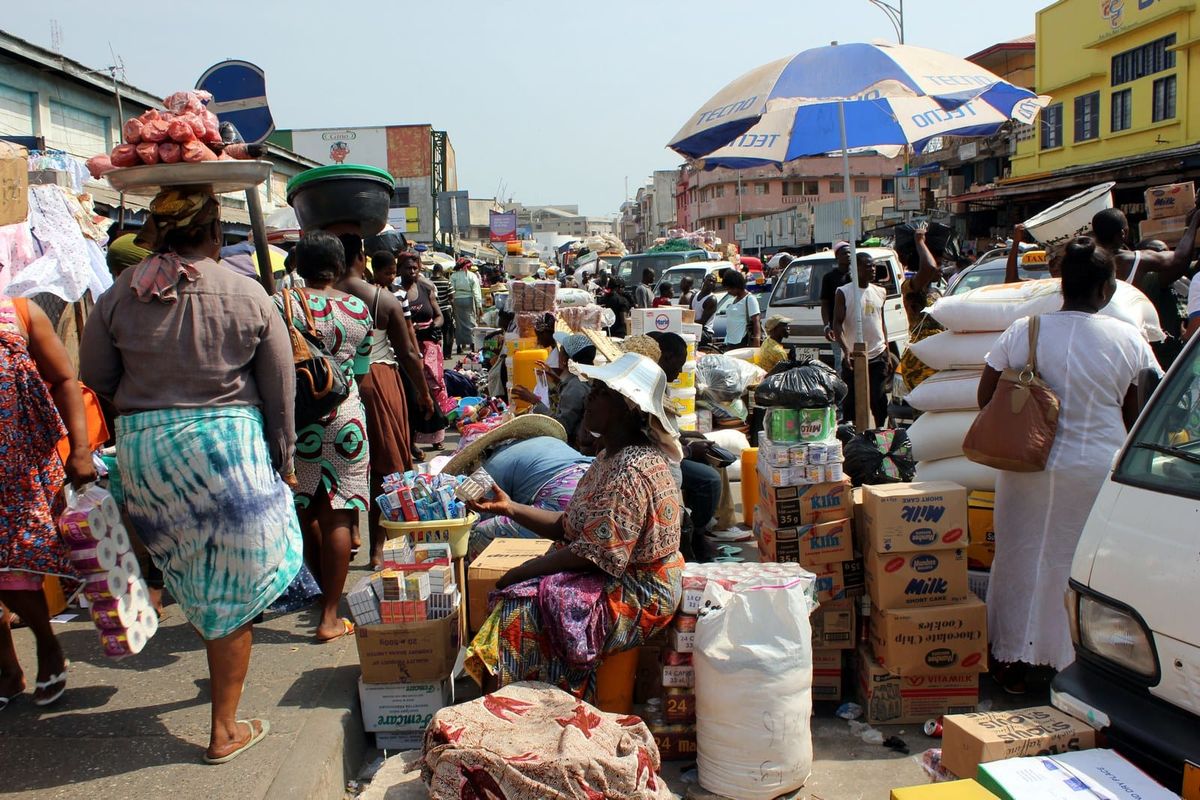
After dark in Osu, the sit-down restaurants thin out. The real action moves to the side streets — the ones that never make it onto a tourist map, where a vendor lights a charcoal fire and a crowd slowly forms around it. Office workers, students, a driver still in his uniform, all waiting for the same thing.
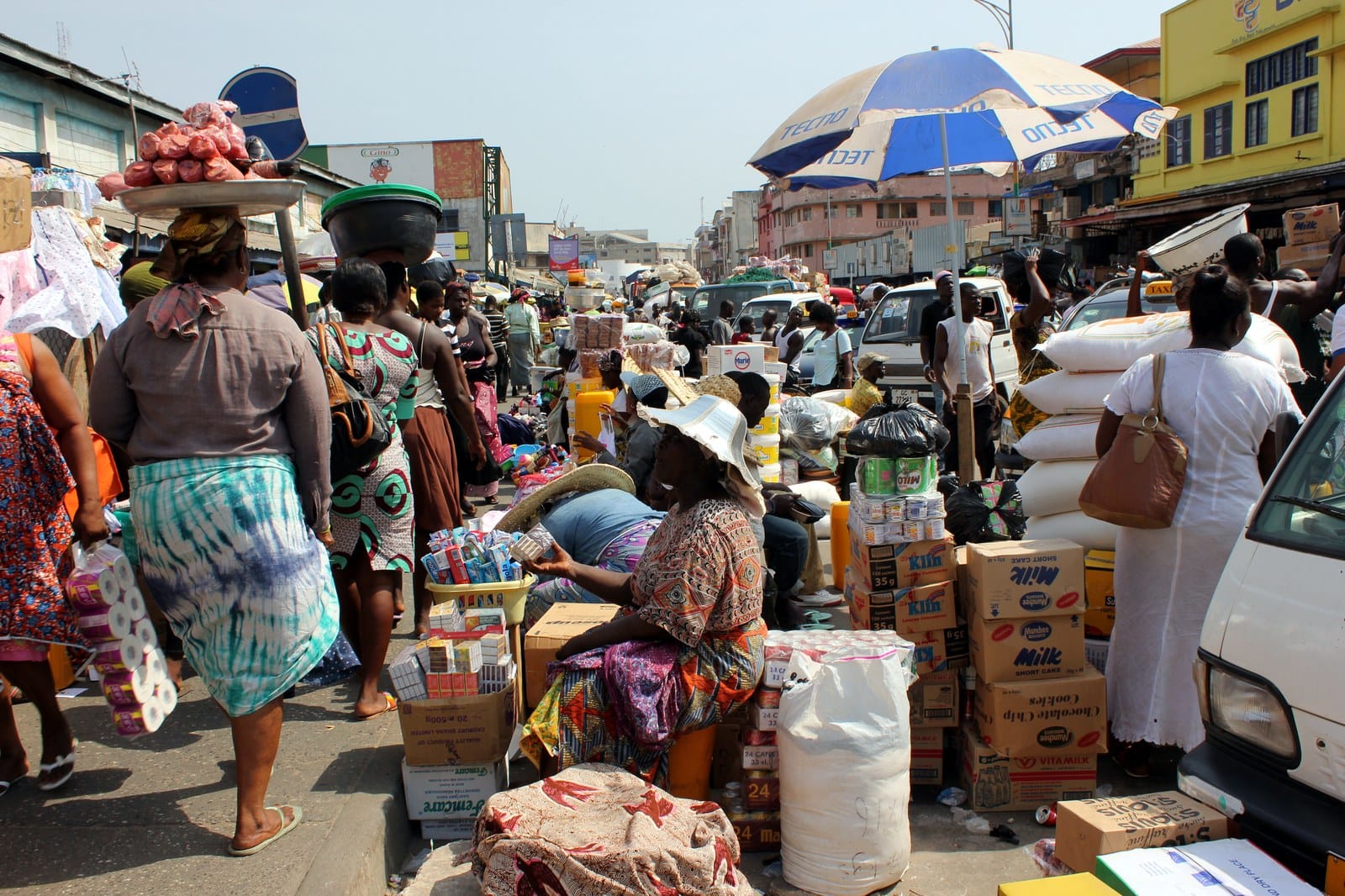
That is Accra's street food. Not a tourist attraction, not a trend. Just how the city feeds itself, every day, from stalls people have trusted for years.
This is a guide to what to order and why it matters — the dishes that define eating in Ghana's capital, and the kind of places locals go to find them. No fancy restaurants. Just the food that actually runs the city.
Here is what is worth your time in 2026.
The Ones You Must Eat First
Kelewele — Accra After Dark in a Paper Bag
You smell Kelewele before you see it.
Ripe plantains, sliced thick, marinated overnight in ginger, garlic, ground pepper, and sometimes cloves, then dropped into hot oil until the outside caramelises and the inside stays soft and sweet. The vendor — usually a woman, usually with a large wok over a wood or charcoal fire — bags it up and adds a fistful of roasted groundnuts on top.
You eat it standing on the pavement, burning your fingers slightly, not caring at all.
This is an evening food, almost without exception. Kelewele vendors appear after seven and sell until the fire dies. In 2026, a good-sized bag runs between GHS 15 and GHS 25 depending on where you are. In Osu and Labone, expect the higher end. Worth every pesewa.
Do not: buy it from a vendor who is not busy. The turnover matters — you want fresh oil and freshly cooked batches.
Waakye — The Breakfast That Outsells Everything Else
If you sleep past nine and miss Waakye, you will regret it until lunchtime.
Waakye (say it: waa-chay) is rice and beans cooked together with dried millet stalks — the stalks are what give it that distinctive reddish-brown colour and slightly earthy depth. On its own, it is already good. But the way it is served is the whole point.
You get a plate, and then you start adding: a scoop of stew, a boiled egg, fried fish or beef, spaghetti, a hard-boiled egg, shito. Shito is the dark, smoky, intensely savoury pepper sauce made from dried shrimp, onions, and blended chillies that every Ghanaian family has its own version of. Some vendors add gari for texture. The combination sounds impossible, but it is completely right.
The best Waakye spots sell out by ten in the morning. This is not an exaggeration. Go early, queue early, eat well.
A full plate in 2026 costs between GHS 25 and GHS 50, depending on how many toppings you add. Budget travellers can eat a full, satisfying meal for under GHS 30.
Banku and Grilled Tilapia — The Dish That Settles Every Debate
Around Labadi Beach, the banku-and-tilapia spots are easy to spot: no sign outside, just a charcoal grill visible from the road and a row of plastic chairs. They tend to do one thing, and do it well.
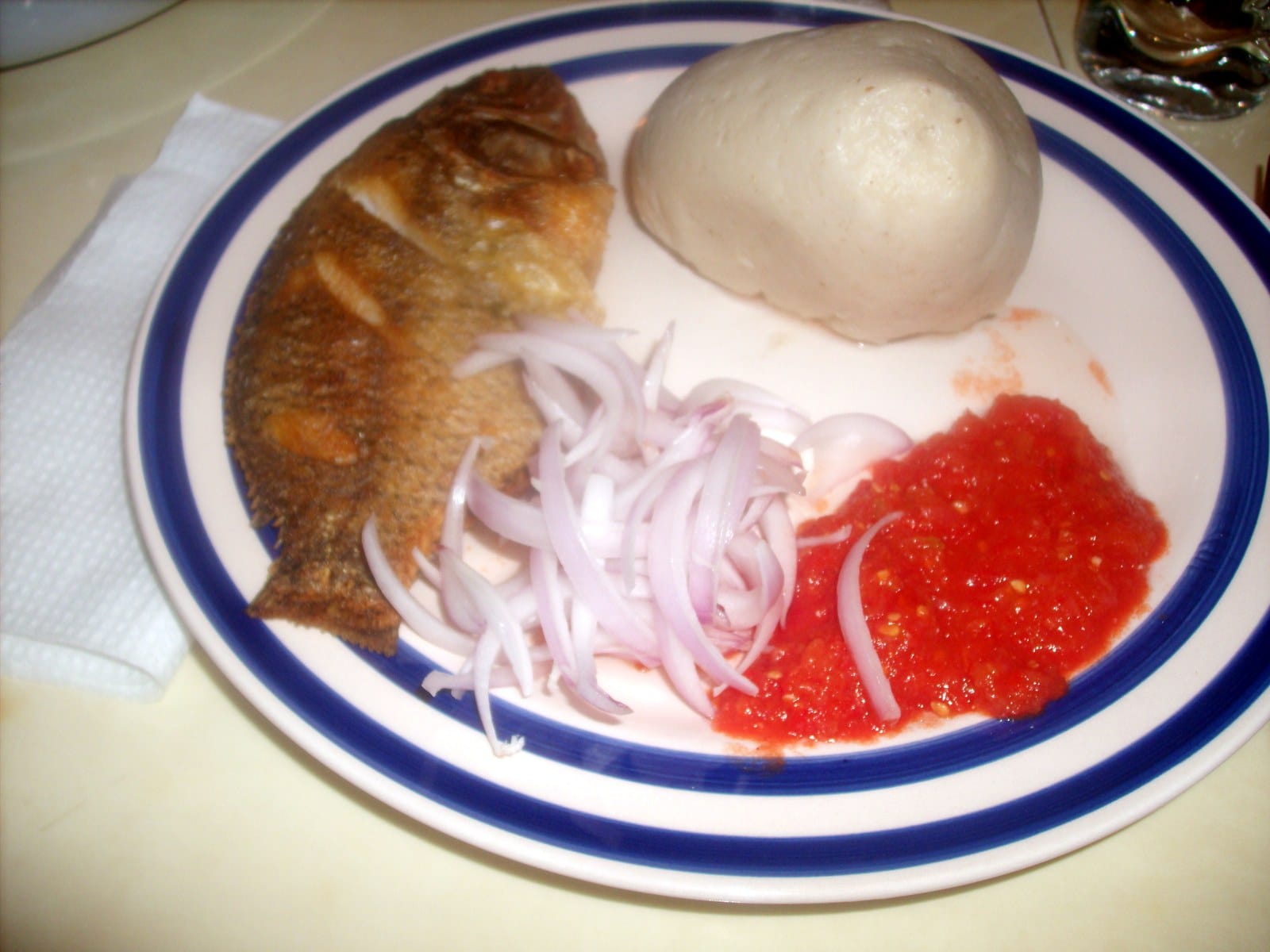
Banku is a fermented dough made from corn and cassava. It is smooth, slightly sour, slightly dense — not a flavour everyone loves immediately, but one that grows on you very quickly. You tear off a piece, shape it in your fingers, dip it in the raw pepper sauce, and pair it with a bite of the whole grilled tilapia — seasoned, cooked on a charcoal grill until the skin crisps and blisters.
The sourness of the banku, the smokiness of the fish, the heat of the fresh pepper — there is a balance here that no restaurant version ever quite gets right because the restaurant versions are not cooked on real fire.
Eat this near the coast if you can. The fish is fresher.
Chinchinga — The Evening Skewer You Stop Walking For
Chinchinga is Ghana's suya. Beef or chicken on a stick, rubbed in a spiced groundnut paste, grilled over open coals until the outside chars and the inside stays juicy. The smoke from the grill drifts across the street and does the marketing for the vendor better than any sign could.
It is a walking food — you eat it as you move, pulling the meat off the stick. Six skewers for GHS 20 to GHS 30 in most parts of Accra. At bus terminals and evening markets, vendors set up close to where people are waiting or moving, because they know you will not be able to walk past.
Kaneshie and Circle are reliable spots. So is anywhere near a busy junction after six in the evening.
The Ones the Guidebooks Miss
Gari Fortor — Honest Food for Honest Prices
Gari Fortor does not look like much. It is gari — dried, granulated cassava — fried in a tomato base with sardines or eggs, sometimes both. The texture is slightly grainy, slightly crispy in places where the gari catches the pan, and it smells like home to anyone who grew up in West Africa.
It is cheap, fast, and filling. You find it at small roadside stalls near universities and markets — places where people need to eat well on very little. GHS 10 to GHS 15. The vendors who add a bit of shito on the side are the ones to go back to.
Tuo Zaafi — The Northern Dish That Quietly Took Over the City
Originally from Northern Ghana, Tuo Zaafi — or TZ, as everyone calls it — has spread to almost every part of Accra. It is a soft, smooth swallow made from maize or millet flour, served with a green soup made from ayoyo leaves (jute leaves). The soup is light, slightly viscous, and slightly mucilaginous in a way that works. It usually comes with goat meat, beef, or fish.
TZ is the kind of food that makes you quiet when you are eating it. There is nothing flashy about it. It is just deeply, simply good.
You find the best versions in Accra's areas with large Northern Ghanaian communities — Nima, Mamobi, and surrounding neighbourhoods.
Red Red — The Dish That Proves You Do Not Need Meat
Red Red is black-eyed beans slow-cooked in palm oil with onions, tomatoes, and spices, served alongside fried ripe plantain. The name describes the colour: the red of the palm oil, the red of the tomato. Some vendors add dried fish or smoked herring to deepen the flavour; the vegetarian versions stand perfectly well on their own.
This is one of the few Ghanaian street dishes that is naturally plant-based, which matters more than it used to — you will find younger Accra residents increasingly looking for meat-free options, and Red Red is where most of them land.
Kenkey with Fried Fish and Shito — The Most Accra Thing You Can Eat
Kenkey is fermented corn dough, steamed inside corn husks until it is dense and tangy and slightly sour. It is served with a whole fried fish — crispy skin, soft inside — and shito. Raw onions on the side. Sometimes sliced tomatoes.
Every neighbourhood has a Kenkey seller. This is not a dish you go looking for — it finds you. And when it does, sit down and eat it slowly. The combination rewards patience.
Omo Tuo with Groundnut Soup — Worth Sitting Down For
Omo Tuo is rice cooked until very soft, then mashed and formed into smooth balls. It is served in a thick groundnut soup — rich, nutty, aromatic, made with roasted peanuts blended into a base of tomatoes, onions, and meat stock. Goat meat and dried fish are the most common additions.
You will not find this on every street corner. It lives in proper chop bars — the kind with plastic tables and ceiling fans and a handwritten menu on a chalkboard. Order it and do not rush.
Bofrot — The Morning Doughnut That Ghanaians Are Loyal To
Bofrot are deep-fried dough balls. Slightly sweet, slightly spiced, soft inside. They are sold warm in plastic bags by vendors who set up in the morning near schools, bus stops, and markets. Eaten with tea, with pap, or just on their own as you walk.
They look simple. A fresh hot bofrot from a good vendor is genuinely one of the small pleasures of being in Accra in the morning.
Palm Nut Soup (Abenkwan) — The Sunday Standard
Abenkwan is a rich, deep-orange soup made from palm nut cream, slow-cooked with marinated meat, seasoning, and smoked fish. It is one of Ghana's most celebrated dishes, and it is the kind of meal that Ghanaian families make on Sundays when there is time to do it properly.
On the street, you find it in traditional chop bars — not from vendors. It is best eaten with banku, fufu, or omo tuo. Order it with goat meat if you can. Do not rush it.
Ghanaian Jollof and the Debate That Won't Die
The Jollof wars are not going away. Ghana and Nigeria have argued for years over whose version reigns supreme, and neither side shows any sign of conceding.
Ghanaian Jollof is fragrant and properly seasoned, often cooked over firewood — which gives it a smokiness the oven-cooked versions cannot match. It is served at roadside spots across Accra, usually with goat, beef, or fried chicken.
This is not a fight worth picking a side in. What matters for a visitor is simpler: the firewood-cooked versions are the ones to seek out, so try one and form your own opinion.
Corn on the Cob with Fresh Coconut — The Underrated One
Seasonal, simple, and surprisingly perfect. Vendors roast corn on roadside charcoal grills — it chars, caramelises, and takes on a smokiness that transforms what would otherwise be a plain snack. Paired with chunks of fresh coconut, the sweetness of the coconut and the smoke of the corn create a combination that does not need improving.
Available during Ghana's corn season (roughly June to August and November to January). If you are there at the right time, buy it.
Practical Notes for 2026
Prices have moved. Ghana's cedi has been through significant fluctuation over the past two years. As of 2026, budget GHS 15–50 for a proper street meal depending on the dish and the location. Osu and Airport Residential Area will always be slightly more expensive than Nima or Kantor Bila.
Cash still rules the street. Mobile money (MTN MoMo, Telecel Cash) is increasingly accepted but not universal for small amounts. Carry GHS 5, 10, and 20 notes.
Timing is everything. Waakye — before 10am. Kelewele, Chinchinga — after 7pm. Banku and tilapia — lunch and early evening. Getting there at the wrong time means the pot is empty.
Connectivity while travelling. If you are coming from outside Ghana, an Airalo eSIM gives you data from the moment you land — no SIM swapping, no roaming fees, and you can activate it before your flight. Useful when you need Google Maps to find that chop bar near Labadi. Get your Ghana eSIM on Airalo → (we earn a small commission at no cost to you)
Before you fly. Visa and entry rules change. Check the current requirements through the official Ghana Tourism Authority rather than a third-party blog — it is the only source worth trusting on this.
Eat It the Way Accra Does
Accra's street food is not something you schedule into a tour. It is something you fall into — you smell something, you follow the smell, you end up at a stall with plastic seats and no English menu, and you eat the best thing you have had all week.
Stop trying to plan it. Walk the streets hungry. Ask what is good today. The vendor knows better than any guide does.
Going deeper into West African food? Read our guide to more Afrofeast food guides — the sit-down meals worth building a trip around.