The 10 Best Kenyan Dishes You Need to Eat Before You Leave Nairobi
The 10 Kenyan dishes worth building your trip around — from Nyama Choma at a Nairobi roadside grill to Pilau on the coast. A real food guide for 2026.

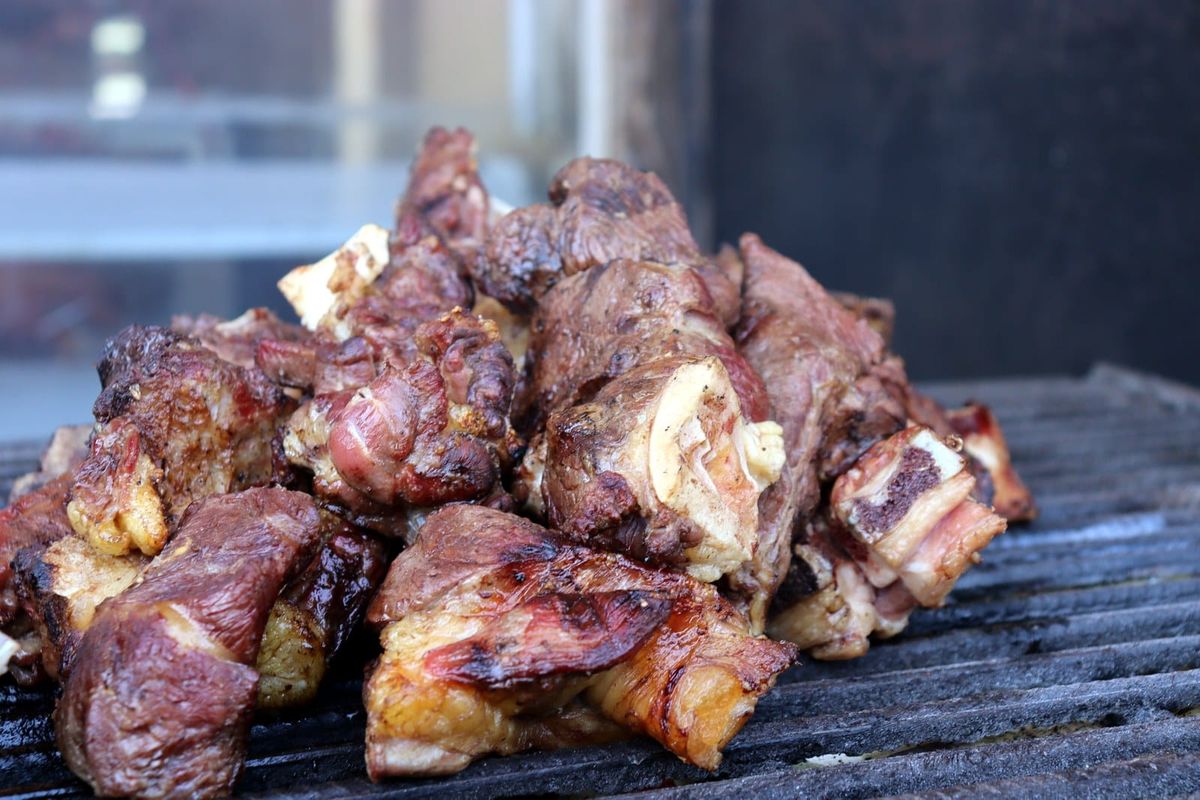
The first time someone puts a plate of Nyama Choma in front of you in Nairobi, you understand immediately why Kenyans talk about food the way they do.
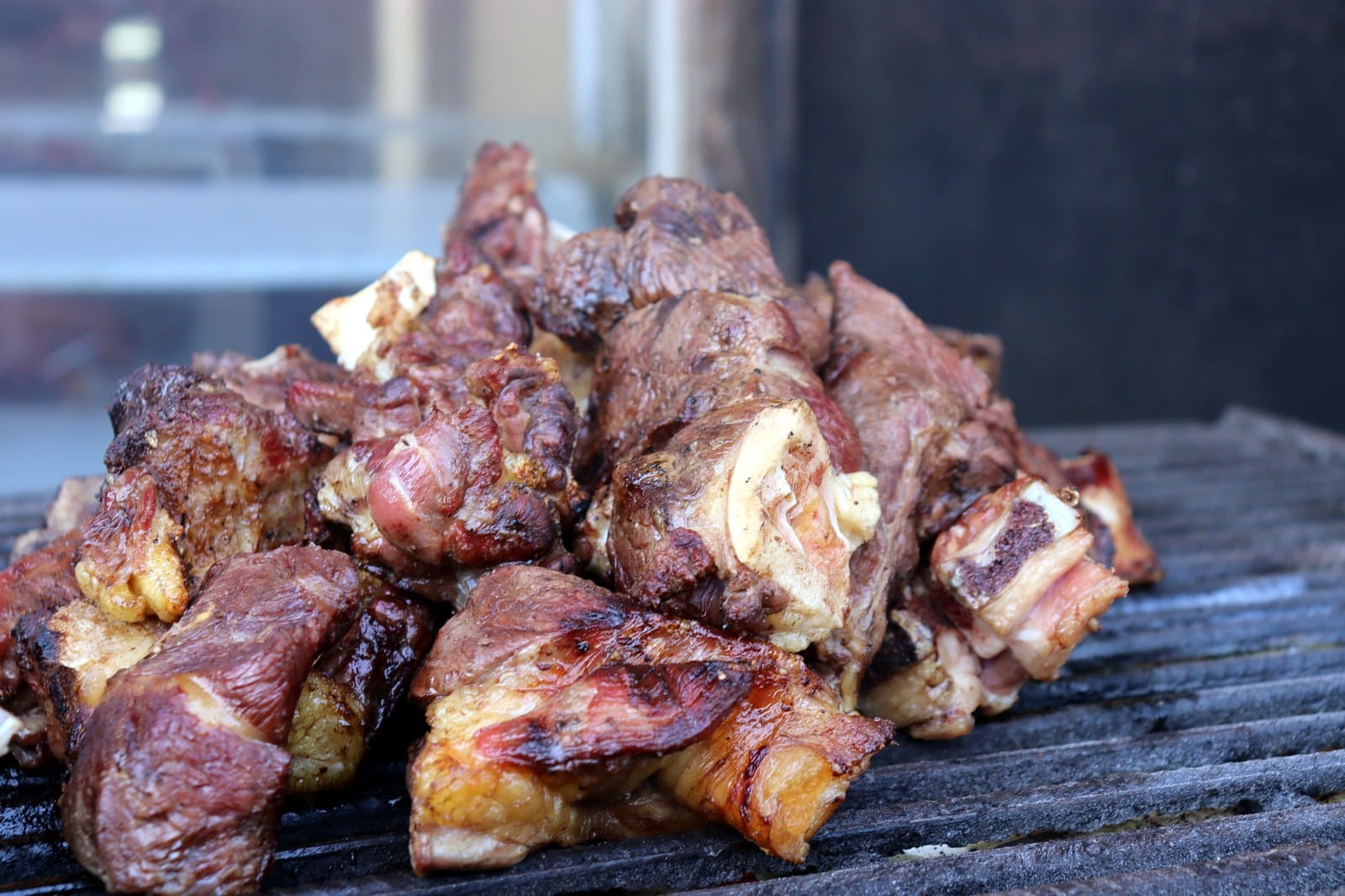
It is not complicated. It is not decorated. It is just meat — goat, usually — grilled over charcoal until the outside chars and the fat renders and the smell carries halfway down the street. You eat it with your hands, with a side of Ugali and Kachumbari, at a plastic table under a corrugated iron roof, while someone argues about football at the next table.
That is Kenyan food. Honest, direct, deeply satisfying.
Here are the ten dishes that define it.
1. Nyama Choma — The Dish Kenya Celebrates With
Nyama Choma means grilled meat. Simple description for something that carries enormous cultural weight.
In Kenya, Nyama Choma is not just food — it is how you mark a good day. A promotion, a reunion, a weekend with friends. You go to a Nyama Choma joint, you order by the kilogram, you wait while it grills, and you eat slowly over a long afternoon.
Goat is the classic choice. The meat is salted, sometimes marinated lightly, and grilled on open charcoal. No sauce. No glaze. The quality of the meat and the heat of the fire do everything. It arrives at the table in chunks, still slightly sizzling, alongside a raw tomato and onion salad and a mound of Ugali.
Where to eat it in Nairobi: Carnivore Restaurant is the most famous spot — they also grill game meats if you want something beyond goat and beef. For a more local experience, the Nyama Choma joints along Ngong Road and in Westlands are where Nairobi actually eats.
Cost in 2026: KES 800–1,500 per kilogram depending on the cut and the location.
2. Ugali — The Anchor of Every Kenyan Meal
Ugali is white maize flour cooked in boiling water, stirred constantly until it becomes a dense, smooth dough. It is formed into a mound and served as the base for almost every Kenyan meal.
On its own, Ugali tastes of almost nothing. That is not the point. It is a vessel — something to pinch off, shape in your fingers, and use to scoop up stew, sukuma wiki, or that pool of Nyama Choma juices left on the plate. The texture is soft but substantial, filling in the way that only starch can be.
Kenyans eat Ugali daily. Multiple times a day, in many households. If a Kenyan tells you they had a proper meal, they almost certainly had Ugali.
You will find it everywhere — at home, at roadside joints, at restaurants from the cheapest to the most expensive. There is no version of eating in Kenya without encountering Ugali.
3. Sukuma Wiki — The Greens That Feed a Country
Sukuma Wiki translates roughly to "push the week" — the name reflects its role as an affordable everyday vegetable that stretches a meal when money is tight.
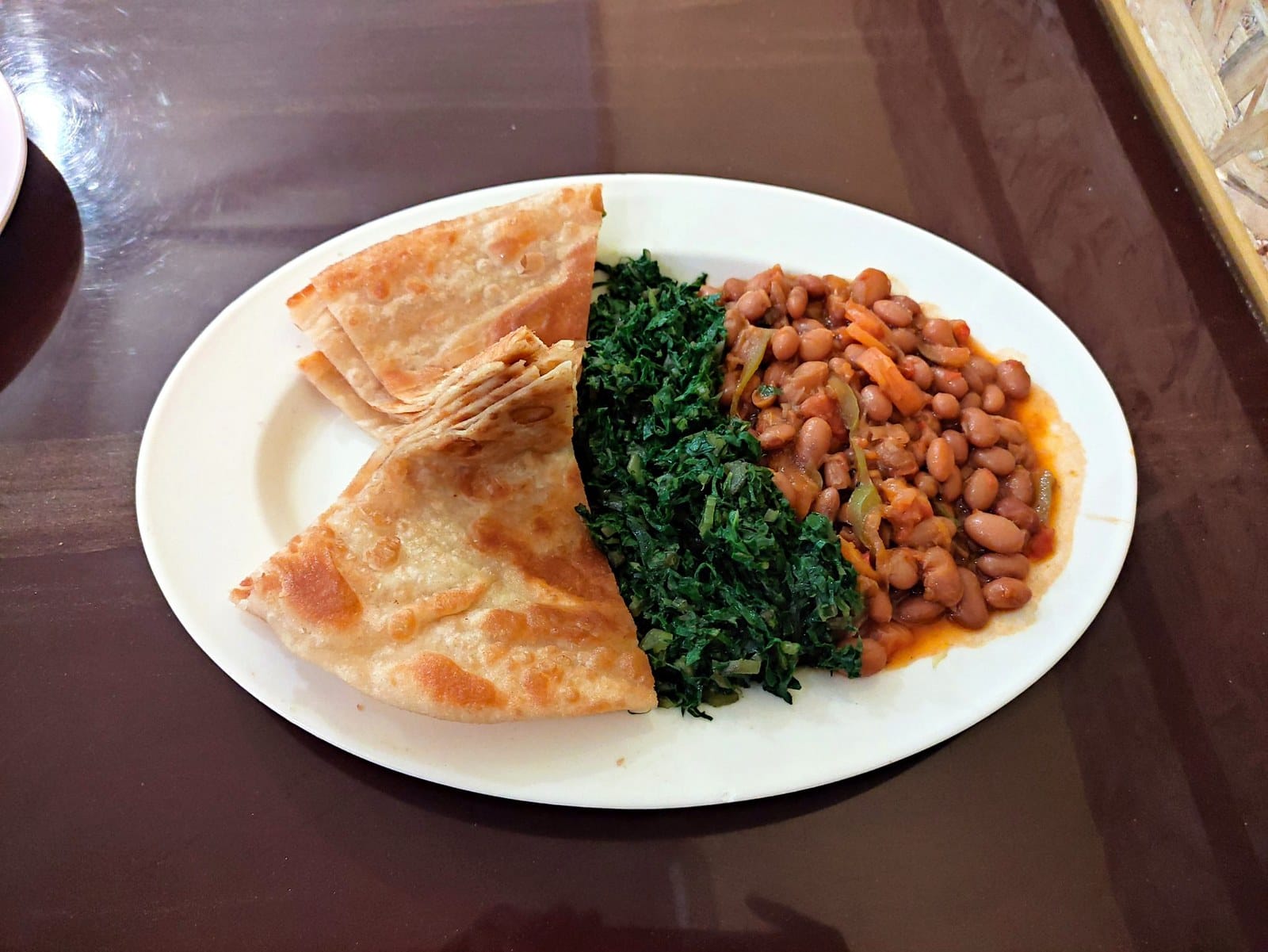
It is collard greens, shredded and stir-fried with onions, tomatoes, and a little oil. Sometimes garlic. Sometimes a splash of stock. Fast to cook, cheap to buy, nutritious, and the standard companion to Ugali across Kenya.
Do not dismiss it as a side dish. A well-made Sukuma Wiki — properly wilted, slightly caramelised at the edges, seasoned right — is genuinely good. It is also everywhere, from the most basic canteen to a mid-range restaurant, always at the lowest price point on the menu.
4. Pilau — The Spiced Rice That Comes From the Coast
Pilau is Kenya's spiced rice dish, brought inland from the Swahili coast and now eaten across the country. Long-grain rice is cooked with whole spices — cumin, cardamom, cinnamon, cloves, black pepper — in a broth with onions and beef or chicken. The result is fragrant, slightly dark, richly flavoured.
Mombasa Pilau is the most celebrated version. The coastal recipe has a depth of spice that comes from generations of Swahili, Arab, and Indian culinary influence along the Indian Ocean trade routes. If you are ever on the coast, eat Pilau there. The inland versions are good. The coastal original is better.
Good Pilau in Nairobi: Swahili Plate restaurant in Westlands, or any coastal Kenyan restaurant in the city.
5. Chapati — Kenya's Everyday Flatbread
Chapati arrived in Kenya through the Indian community during the colonial era and became so embedded in Kenyan cooking that most people now consider it entirely their own. Which, at this point, it is.
Kenyan Chapati is flaky, slightly layered, cooked on a flat griddle in oil until the surface blisters and browns. It is served with stew, with beans, with eggs, with whatever is going. It is also eaten on its own as a snack, folded around a piece of meat, or as breakfast with tea.
The best Chapati is made fresh to order. You can smell the griddle from the street. Follow that smell.
6. Githeri — The Humble Dish That Became a Meme and Then a Staple Again
Githeri is boiled maize and beans, cooked together until soft, sometimes fried with onions and tomatoes, sometimes eaten plain. It is one of the oldest Kikuyu staples — simple, filling, affordable.
In 2017, a Kenyan man photographed eating Githeri while voting went viral globally — "Githeri Man" became a national celebrity overnight. The dish briefly became famous internationally.
But Githeri was never gone. It has been feeding Kenya for generations. You find it in school canteens, market food stalls, home kitchens. It is the kind of food that does not need attention to keep doing its job.
A bowl of Githeri in Nairobi costs KES 50–100. One of the most complete, affordable meals in the city.
7. Mutura — Nairobi's Street Sausage
Mutura is a Kenyan blood sausage — goat or beef intestine stuffed with minced meat, blood, onions, and spices, then grilled on charcoal until the casing crisps. It is sold by street vendors in the evenings, sliced into rounds and served with a toothpick and sometimes a squeeze of lemon.
It is not for everyone. The flavour is deep, slightly metallic from the blood, intensely savoury. But if you eat offal, or if you are curious about where Kenyan street food goes when it is not performing for tourists, Mutura is where you find it.
Look for the charcoal grills on Nairobi's side streets after dark. The vendors near Tom Mboya Street and in Eastlands are the ones locals go to.
8. Mandazi — The East African Doughnut
Mandazi is a lightly sweetened, deep-fried dough — triangular or round, slightly denser than a Western doughnut, with a hint of coconut milk and cardamom in the dough. It is breakfast food, tea-time food, snack food.
You eat it warm, either plain or dipped in tea — chai, which in Kenya means heavily spiced, milky, sweet tea that is a national institution in itself. The combination of a hot Mandazi and a cup of Kenyan chai at seven in the morning is one of the genuine pleasures of being in this country.
Mandazi vendors set up near bus stops and market entrances in the early morning. KES 10–20 each.
9. Maharagwe — Red Kidney Bean Stew
Maharagwe is red kidney beans slow-cooked in coconut milk with onions, tomatoes, and spices. It is a coastal Kenyan dish, deeply influenced by Swahili cooking, and it is one of the warmest, most comforting things you will eat in East Africa.
The coconut milk softens the beans and creates a rich, slightly sweet sauce. It is served with rice or Chapati. The coastal versions — eaten in Mombasa or Malindi — have more coconut, more depth. The inland versions are slightly drier and spicier.
Either way: order it. It is also naturally vegan, which matters more now than it used to in Kenyan restaurants.
10. Kachumbari — The Salad That Goes With Everything
Kachumbari is not a dish you order on its own. It is the thing that comes alongside everything else — diced tomatoes, red onion, fresh chilli, coriander, lime juice. Sometimes avocado. Always fresh.
The acidity and heat of Kachumbari cuts through the richness of Nyama Choma, lifts a bowl of Pilau, adds brightness to a plate of Ugali and stew. It is Kenya's answer to the question every rich, meat-heavy meal eventually asks: what cuts through this?
Simple. Essential. On every table that matters.
Where to Eat Well in Nairobi in 2026
Carnivore Restaurant — The iconic Nyama Choma experience, running since the 1980s. Tourist-facing but genuinely good. Go for the meat platters.
Mama Oliech (Kilimani) — Famous for fish. Whole fried tilapia with Ugali, simply done, very well. A Nairobi institution.
Coastal and Swahili restaurants in Westlands — Nairobi's coastal community keeps the Pilau and Maharagwe close to how they are made in Mombasa. Ask around the area; the good ones fill up at lunch.
Local kibandas across the city — The no-frills canteens where Nairobi actually eats. A few hundred shillings gets you Githeri, Sukuma Wiki, and Chapati. Follow the office workers at lunchtime.
Roadside Nyama Choma joints on Ngong Road — No name needed. Follow the smoke.
Practical Notes for 2026
Budget: Eating like a local in Nairobi costs KES 200–500 per meal at a roadside or market restaurant. Sit-down restaurants with table service run KES 800–2,000. Carnivore and upscale spots go higher.
Cash: M-Pesa (Kenya's mobile money) is accepted almost everywhere, even by street vendors. Most also take cash. Foreign cards work at supermarkets and mid-range restaurants but not always at local joints.
Getting around: Nairobi traffic is real. Use the Nairobi Expressway if you are moving between the airport and Westlands. Bolt and Little Cab are the reliable ride apps — safer and cheaper than negotiating with taxis.
Connectivity: An Airalo eSIM before you fly means you have data from the moment you land at JKIA — useful for navigating Nairobi, finding the restaurants above, and not paying roaming fees. Get your Kenya eSIM on Airalo → (affiliate)
Before you fly: Kenya runs an electronic travel authorisation (eTA) system for most visitors, so sort it before you travel. Check current entry requirements via the official Kenya Tourism Board rather than third-party sites.
The Last Word
Kenya's food does not ask for your approval. It has been feeding people for a very long time without needing to be discovered.
What it asks is that you show up hungry, eat what is in front of you, and pay attention.
Do that, and Nairobi will feed you better than almost anywhere in East Africa.
Planning your Kenya trip? Read our guide on what to know before travelling to Kenya for everything you need before you land.